
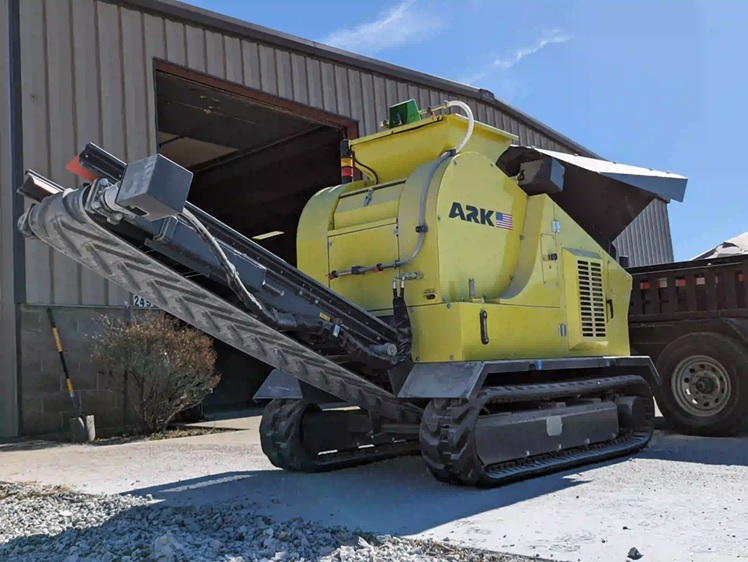
Exploring the Significance of Concrete Crushers in the Construction Industry
If you’ve ever been involved in a construction project, you’ll know the importance of efficient and effective material management. Construction and demolition waste, especially concrete, poses a significant challenge. It’s bulky, heavy, and takes up a lot of space. The solution? You might want to use a concrete crusher.
Why Opt for a Concrete Crusher?
Concrete crushers, as the name suggests, are machines designed to reduce the size of concrete into smaller, more manageable pieces. Here are some reasons why they are increasingly becoming indispensable in the construction industry:
- Environmental Considerations: With the growing emphasis on sustainability and reducing waste, concrete crushers help in recycling and reusing construction waste. Instead of sending tons of concrete debris to landfills, crushing allows for the repurposing of this material, thus reducing environmental impact.
- Cost-Effective: Transporting large chunks of concrete for disposal can be expensive. By using a crusher, the volume of waste gets significantly reduced, resulting in lower transportation costs. Moreover, the crushed concrete can be reused in other projects, further saving money.
- Space-saving: A construction site can be a chaotic place with materials strewn all over. Having large chunks of concrete can further add to the mess. Crushing this concrete not only makes it more manageable but also frees up space, making the site more organized.
- Safety: Large pieces of concrete can be hazardous. There’s a risk of accidents if they’re not properly managed. Crushing them ensures that the site remains safe for workers.

Different Types of Concrete Crushers
Concrete, an indispensable component in the construction industry, has been used for centuries to build durable structures. As urban development continues, the removal and recycling of old concrete becomes essential. In this process, concrete crushers play a pivotal role. But not all concrete crushers are the same. In this guide, we delve into the diverse world of concrete crushers, shedding light on their functionality and distinctive characteristics. If you’re interested in learning more about machinery, this is the article that offers a broader understanding of construction equipment.
- Jaw Crushers
Jaw crushers are the quintessential crushing equipment used in large-scale demolition and recycling of concrete structures. They function on a simple mechanism:
- Design: A set of two jaws, one fixed and the other movable, crushes concrete when they come together.
- Application: Particularly effective for hard and abrasive materials, they’re mostly used in primary crushing stages.
- Benefits: Jaw crushers are renowned for their efficiency, producing more cubically shaped, less flaky materials.
- Impact Crushers
Impact crushers bring a different approach to concrete crushing:
- Design: They crush materials by using impact force. When materials enter the crusher, they’re smashed by a high-speed rotating rotor’s blow bars.
- Application: Suitable for soft to medium-hard materials. They’re also the choice for producing more refined, cubic shaped end products.
- Benefits: These crushers provide a higher reduction ratio with less energy consumption.
- Cone Crushers
Cone crushers, often reserved for secondary or tertiary crushing, operate on a very different mechanism:
- Design: Using a rotary design, materials are crushed between an oscillating cone and a fixed piece.
- Application: They are especially effective for hard and abrasive materials that need a finer finish.
- Benefits: Besides their efficiency in producing refined products, they have adjustable settings to control the size of the final product.
- Gyratory Crushers
Gyratory crushers are somewhat similar to cone crushers but have their own unique features:
- Design: They have a concave surface and a conical head. Both surfaces are typically lined with manganese steel for durability.
- Application: Primary crushing of hard materials.
- Benefits: They can handle large pieces of material and are often used in large-scale industrial applications.
- Compound Crushers
An ingenious blend of impact and hammer crusher styles, compound crushers offer a hybrid approach:
- Design: The machine employs both impact and hammer methods. When materials enter the crusher, they face both impacting and hammering forces for crushing.
- Application: Suitable for medium-hard, brittle materials.
- Benefits: Compound crushers are versatile, giving a combined benefit of both crushing styles.
- Roll Crushers
Roll crushers offer a rather simplistic but highly effective mechanism:
- Design: Using two horizontally mounted rolls, one rotating faster than the other, materials are crushed in the shear and compressive forces.
- Application: They’re most effective for softer materials and can provide a finer product than jaw crushers.
- Benefits: They’re compact, easy to operate, and produce a uniform product.

Key Features to Look For when choosing the Right Concrete Crusher
Choosing the right type of concrete crusher is crucial for the success of your demolition or recycling project. The choice primarily depends on the type of material, the scale of the project, and the desired final product. When considering a concrete crusher, it’s essential to choose one that fits your requirements.
Here are some factors to keep in mind:
- Durability: Built from materials that can withstand the rigorous wear and tear of crushing hard concrete structures.
- Ease of Maintenance: A design that allows for easy access to parts that may need repair or replacement can save a lot of time and money.
- Efficiency: How much concrete can it crush in a given time? More efficient machines can speed up your project.
- Size of the Final Product: Crushers that provide adjustable settings can be very useful if you need the crushed concrete to be of a particular size.
- Portability: If you need to move the crusher around frequently, models designed for easy transportation will be invaluable.
- Safety Features: Features such as emergency stop buttons, safety locks, and protective barriers can prevent accidents on the job.
- Environmental Considerations: Crushers with dust and noise suppression features can be beneficial for projects in populated areas.
Making the Most of Your Concrete Crusher
Once you’ve made the investment, it’s all about ensuring that the machine serves you well for years. Here’s how:
- Regular Maintenance: Even if your machine is known for low maintenance, regular checks can prevent potential issues.
- Training: Ensure that the personnel operating the crusher are well-trained. This not only ensures efficient operations but also minimizes wear and tear.
- Safety Protocols: Always adhere to safety guidelines. This includes using safety gear and ensuring that the machine is operated in a secure environment.
To sum it up, a concrete crusher isn’t just a piece of machinery; it’s an investment in efficiency, safety, and environmental conservation. If you’re in the construction industry and aren’t already leveraging the benefits of concrete crushers, now might be the time to reconsider. With the right machine, not only can you streamline operations, but also contribute to a more sustainable future.
 Business News