
Metallography is the study of the microstructure of metals and alloys. This scientific discipline plays a crucial role in materials engineering, manufacturing, and quality control, allowing experts to analyze the physical and mechanical properties of metal specimens. By examining the structure of metals at a microscopic level, metallographers can assess material integrity, detect defects, and optimize processing techniques for enhanced performance and durability.
The Metallographic Process
The study of metal microstructures involves a systematic process that includes sample preparation, examination, and analysis. The first step is sample preparation, which involves cutting, mounting, grinding, and polishing the specimen to ensure a smooth surface. This step in Metallography is essential, as any imperfections can obscure the details of the microstructure. Once prepared, the sample is often etched with a chemical reagent to reveal structural details such as grain boundaries, phase distributions, and inclusions.
Techniques and Tools in Metallography
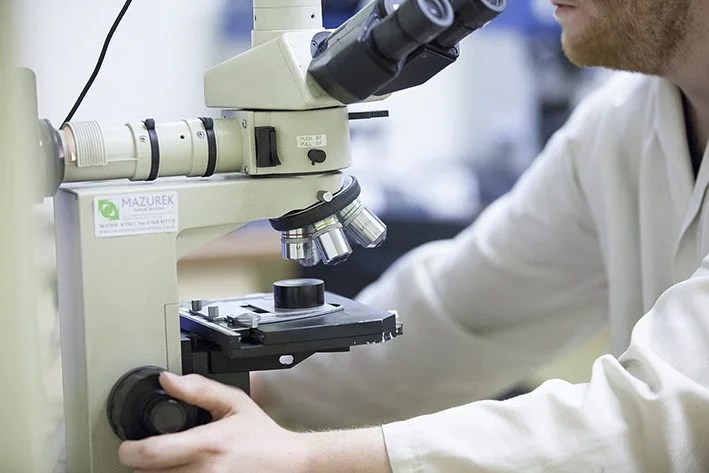
Metallographic analysis employs a variety of techniques and tools to study metal microstructures. Optical microscopy is one of the most common methods, using light microscopes to magnify and capture images of the metal’s structure. For more detailed analysis, scanning electron microscopy (SEM) provides high-resolution images and allows for elemental composition analysis. Transmission electron microscopy (TEM) goes even further, enabling the examination of nanoscale structures. Other advanced techniques, such as X-ray diffraction and electron backscatter diffraction, provide additional insights into the crystallographic properties of metals.
Applications of Metallography
Metallography is widely used in industries such as aerospace, automotive, construction, and manufacturing. It is essential for quality control, failure analysis, and research and development. In aerospace engineering, metallography ensures that critical components meet stringent safety and performance standards. In automotive manufacturing, it helps optimize materials for strength and durability. The study of metallography is also vital in forensic engineering, where it aids in investigating material failures and accidents.
Advancements in Metallographic Studies
With advancements in technology, metallography continues to evolve, incorporating digital imaging, automation, and artificial intelligence to enhance analysis efficiency and accuracy. Modern software allows for automated grain size measurement, phase identification, and defect detection, reducing human error and improving repeatability. These innovations make metallography an indispensable tool in modern materials science and engineering.
Metallography remains a fundamental discipline in understanding and improving metal materials. By analyzing microstructures, engineers and scientists can develop stronger, more reliable materials that contribute to advancements in technology and industry.
 Business News